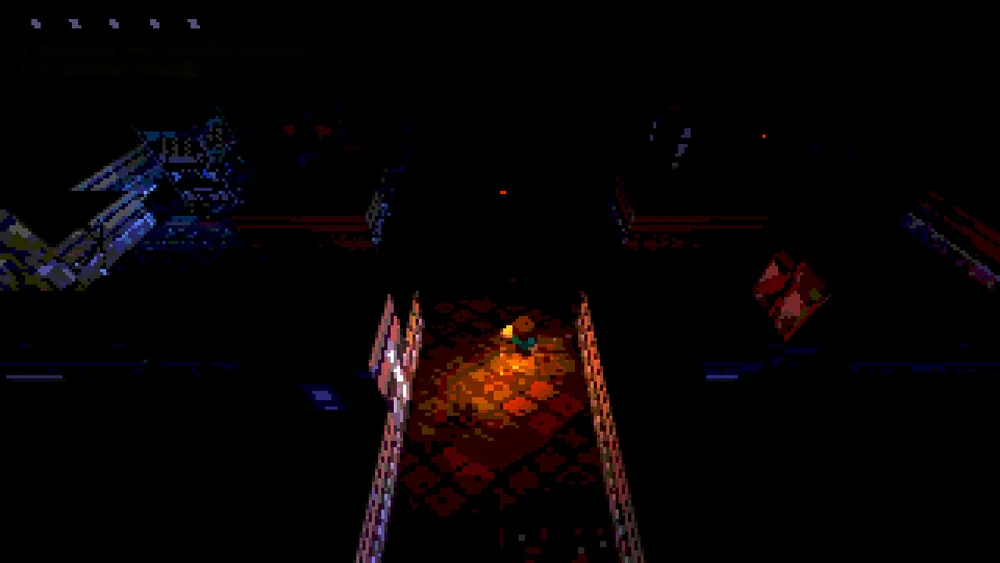
A tiny game with a deliberate sense of place
UNDERRUN is Dominic Szablewski's 2018 js13kGames entry, a browser shooter built under the competition's 13 KB size constraint. In his making-of, the creator describes atmosphere as a central aim. The date matters: this is a rediscovered independent game, not a new release or an example we are claiming was generated by AI.
Its appeal begins with a readable idea: enter a dark science-fiction facility and deal with danger in close corridors. Rather than selling an enormous world, the introduction gives you a small place and an immediate action. The compact scale makes the relationship between movement, visibility and mood easy to pay attention to.
Watch the lighting before you chase the next target
In our documented October 14 desktop check, the opening terminal led into a low-resolution facility and keyboard movement worked with mouse aiming. That was an opening-session check, not campaign completion. We suggest spending the first stretch noticing where a corridor lets you see, where it hides an approach and when you need to move.
This is not a promise of a relaxed session. Dark scenes, shooting and flashing weapon effects are part of the game's presentation. If those conditions are a poor fit, choose a quieter puzzle from the directory instead. The point of a useful introduction is to help the right player recognise the experience.
What the creator says about the small visual system
The making-of explains a tile-based environment rendered through simple geometry and sprites. It also describes a small shared texture sheet and levels stored as PNG images. Those choices give context to the size constraint without requiring a player to read source code before enjoying the game.
Our interpretation is that a tightly controlled look helps separate meaningful lights, walls and movement from visual clutter. The 13 KB figure describes the competition project constraint; it should not be read as a measurement of every browser request, the size of the developer's tools or an automatically fast result on every device.
Try it with the controls the game expects
Use WASD or arrow keys to move, the mouse to aim and clicking to start and fire. Our listing requires a desktop-style keyboard and mouse setup and notes WebGL. It does not claim touch support, and the earlier Chrome check does not establish performance on your phone or a different graphics device.
For the first encounter, prioritise movement and sight lines over standing still to fire. Notice whether you can read an incoming threat and choose a direction. That is a suggested way to assess the opening, not a walkthrough claiming an optimal route or a measured completion time.
Use a small game to ask a bigger design question
UNDERRUN and xx142-b2.exe show two different ways to make a compact browser game distinctive: atmosphere in one case, a repeated time constraint in the other. They are useful companions to the current AI-game conversation because they give us actual experiences and specific design choices to talk about.
Open the game entry for creator credits and the original play link. If you are building an AI-assisted project, the useful challenge is to make your central action equally easy to explain and inspect. Our Master Blaster case provides a current creator-described example; the Roblox Build article explores why working systems alone do not settle the question of fun.
Official references
References checked: . The cover is a credited game screenshot, not output from this tutorial.
Keep going
Browser game guides
Practical reading for players and independent makers.
13 seconds, another try
Discover xx142-b2.exe through its 13-second attempts and traces from earlier runs.
Master Blaster’s maker story
Read a public AI-assisted creator account through grappling, arena combat and a real feedback request.
Are AI games fun?
Read Roblox Build’s October evaluation through player decisions and reasons to replay.