Connectivity and cycles
Net asks you to rotate tiles into one connected network without closed loops. The highlighted tiles show connection to the selected source; a bright cluster alone does not prove the whole puzzle is solved.
Imagine a chain already connecting two neighboring tiles by a longer route. Joining those same ends directly closes a cycle. That apparent improvement in local connectivity is exactly the move the no-loop rule forbids.
A corner is not always a corner
On a board without wrapping, a corner tile cannot send a wire beyond the grid. A two-arm bend there may therefore have only one valid orientation, unless a barrier or another constraint already makes the proposed placement impossible.
Turn wrapping on and that boundary deduction disappears: opposite edges connect. Check the Type settings before treating an outward arm as a dead end. Fixed barriers still constrain connections even on a wrapping board.
Lock only a justified orientation
The manual documents locking a tile after deciding its orientation. Use locking to protect a deduction, not to turn a guess into evidence; unlock it if a later contradiction challenges its justification.
Simon Tatham’s cycle-detection account distinguishes edges actually on a loop from branches merely attached to it. A red cycle should send you to the closed route itself, rather than cause random changes throughout a connected branch.
Replay a specific rotation
On November 14 our desktop Chrome check opened Net instance 5x5:43b446db2a2537ccb67116c51. Rotating the top-left tile enabled Undo; Undo enabled Redo, and Redo restored the rotation. The shared game identifier stayed unchanged through all four states.
This observation is limited to that instance and desktop operation; it is not a completed solve or a touch-screen test. Save the identifier separately from the action sequence. The checklist exports both without claiming to reconstruct every intermediate state.
Official references
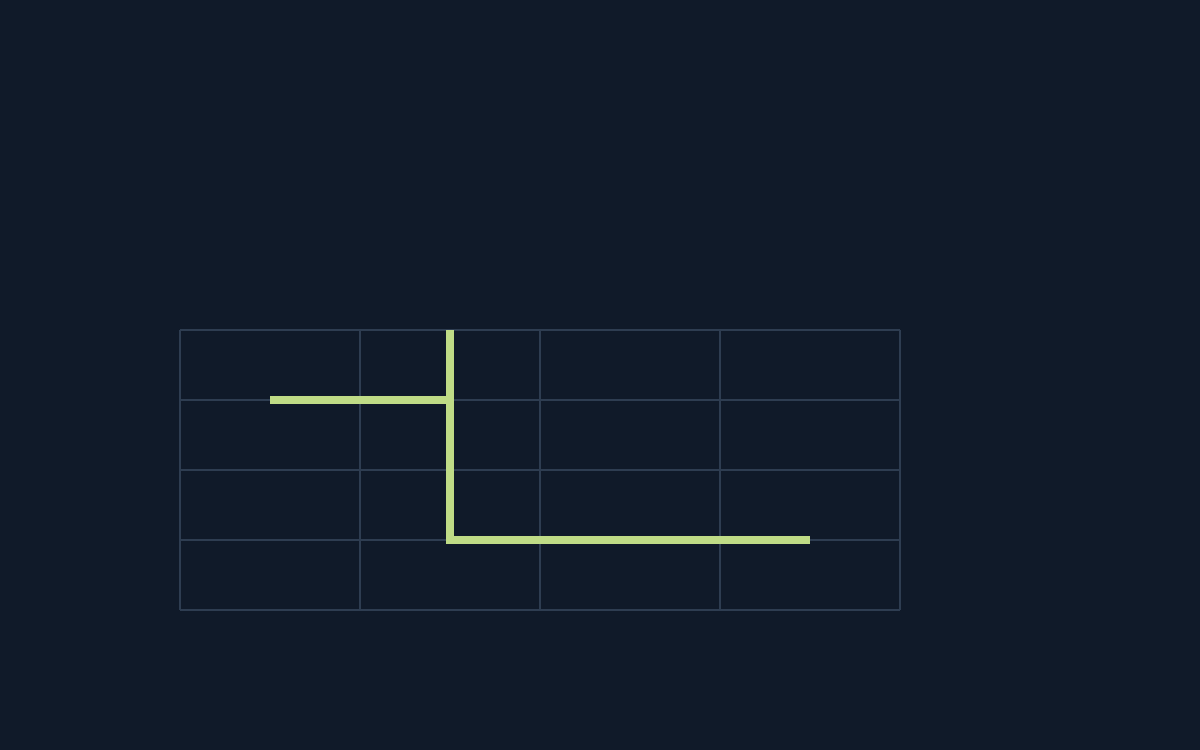
References checked: . Original editorial schematic; not a captured game board.
Keep going
Browser game guides
Practical reading for players and independent makers.
Loopy: satisfy a clue without closing the loop too early
Loopy requires one unbroken loop whose edges satisfy every numbered face. Filling the four sides around a square clue of four would satisfy that face locally, but a completed loop must also be the single global solution.
Untangle: move a point to change crossings, not the graph itself
Untangle lets you reposition vertices while preserving the lines connecting them. The goal is a drawing without crossings, not a different graph with inconvenient edges deleted. A visually tidy circle is only a starting layout.
Release checklist
Record manual browser-game checks and download a preparation report. No remote scan or compatibility certification.