Lead with the action
A useful game description helps someone understand what they will actually do. Start with an action and goal, explain one rule that changes a decision, then give the inputs and build limits. Development history can wait until the reader understands the game; an unshipped roadmap should not read like a feature list.
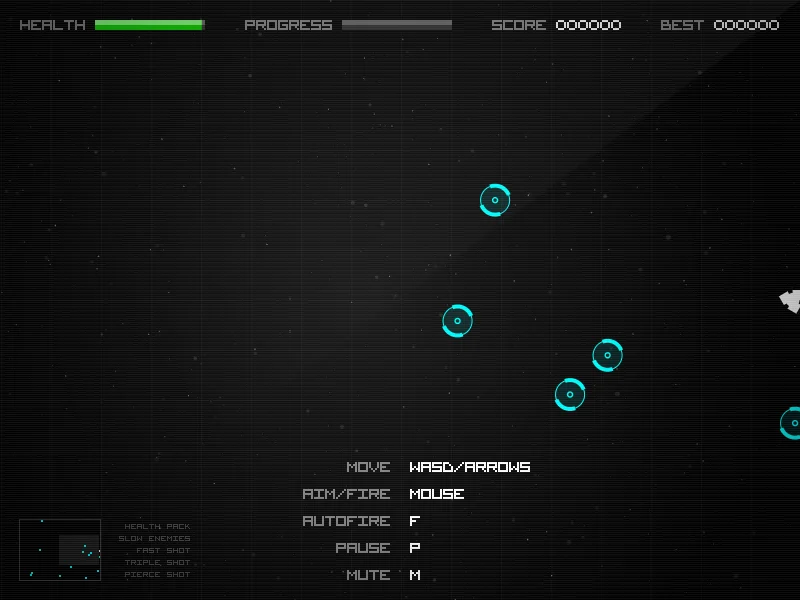
This article teaches editorial choices. The description builder turns your answers into a draft you can edit. The three examples below are original fictional games created for this lesson, not reviewed releases, customer results, or recommendations. The cover is a real screenshot of Radius Raid, not a depiction of any fictional example.
A four-sentence starting point
Use the first sentence for an action and an observable goal. Add a constraint that changes how someone plays. Give the controls next, then state the scope and limits of the current build. This is an editing method, not a promise of search rankings or better conversion rates.
Try: ‘In [name], [main action] to [goal]. [Rule or constraint] changes your next move. Use [controls]. This build is [full release or demo]; checked on [actual environment], with [known limitation].’ Replace every bracket with verified information. If you do not know whether touch or saving works, test it or say it is untested rather than letting the template invent an answer.
Example: a puzzle rule
Vague version: ‘An addictive, magical puzzle adventure for everyone.’ The reader learns no decision they can make, and the evaluation sounds like a claim without evidence.
Fictional rewrite: ‘In Paper Lantern Circuit, rotate mirrors to connect a beam to the exit lamp. You can move only one mirror at a time, so plan the route before turning it. Click mirrors with a mouse. This example describes a six-room demo with desktop mouse controls; touch is untested.’ The action, goal, and constraint are specific without invented awards or player praise.
Example: an action trade-off
Vague version: ‘Epic battles, endless challenges, smooth on every device.’ Avoid those promises unless the current content and actual device testing support them. A genre label cannot establish performance or an infinite amount of content.
Fictional rewrite: ‘In Orbit Courier, steer around debris to deliver batteries to a damaged station. Each dash spends shield energy, so leave enough for the return trip. Move with the arrow keys and dash with Space. This example is a restartable single-stage build that needs a keyboard; gamepad and phone controls are untested.’ A practical trade-off does more work than a superlative.
Example: a quieter game
A slower game still benefits from concrete verbs. Instead of promising a relaxing experience for everyone, say whether the player sorts, places, connects, or observes. Mood can describe an intention without becoming a universal or therapeutic claim.
Fictional rewrite: ‘In Moss Post Office, sort parcels onto belts with matching symbols to organise the forest mail. Each round introduces one symbol, and misplaced parcels can be taken back. Drag with a mouse. This example has three demo rounds without a timer; touch and saving are unverified.’ These are fictional example constraints, not facts you should copy into your own listing.
Check against the build
Read the draft beside the playable release. Can the player perform every action you name? Are demo limits, pricing, and account requirements clear? Does the screenshot show this version? Record unknowns instead of filling a compatibility gap with an all-platform promise.
PixelGamesHub requires at least 80 characters in the submission description, but length alone does not establish editorial quality. Keep personal email addresses, test passwords, and signed preview links out of public copy. Copying or downloading from the tool is not submitting. Prepare a public HTTPS play link, then sign in with a verified account when you are ready to send the listing.
Official references
References checked: . The cover is a credited game screenshot, not output from this tutorial.
Keep going
Browser game guides
Practical reading for players and independent makers.
Game intro builder
Turn your mechanic, goal, and controls into an editable game description. A local template, not an AI writer.
Publish your browser game
Prepare a playable link, honest details, and a submission.
Share your browser game
See what you submit, what stays private, and how review differs from visibility.