“The best puzzle game isn't the hardest one — it's the one that makes the right kind of thinking feel effortless.”
~5-minute read · 3 sections
What separates a great puzzle game from a frustrating one
Every puzzle game is built on a single idea — match, merge, slide, deduce — and the great ones make that idea readable at a glance. You should always understand what a move will do before you make it. Frustration usually comes not from difficulty but from ambiguity: a board where you can't tell why you lost, or where success feels like luck instead of a plan.
So when we pick puzzle games, we look for clean rules and honest difficulty. A good puzzle ramps up by adding ideas, not by adding randomness, and it lets a clever player feel clever. The satisfaction of that quiet "oh, I see it now" moment is the whole genre in one feeling.
Find your type
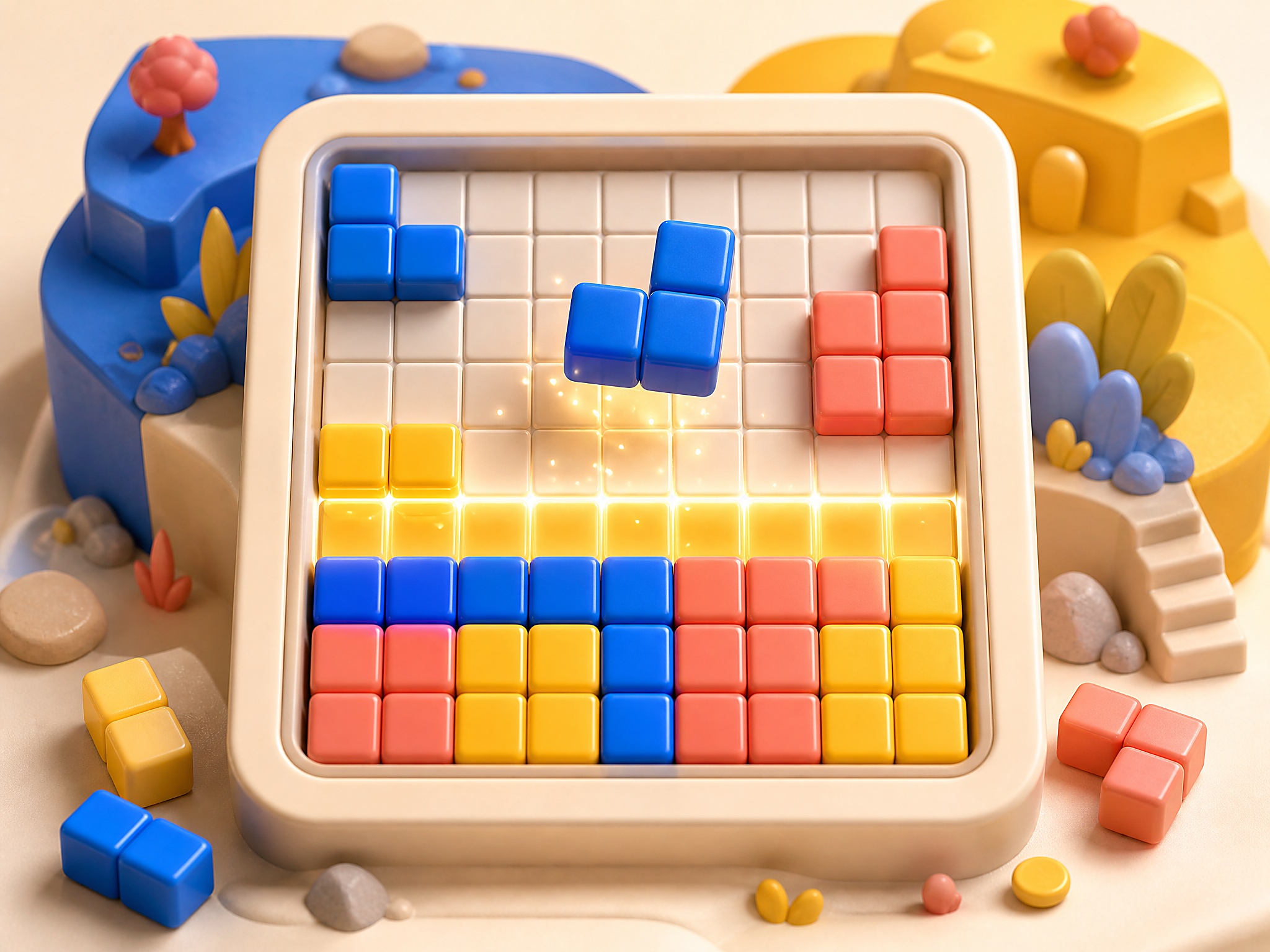
"Puzzle" covers a huge range of moods. Match-3 and block-blast games are the comfort food — pattern-spotting you can do half-asleep. Mahjong and solitaire are slower and more meditative. Nonograms, sliding puzzles, and logic grids are for when you actually want to think hard, and word games scratch a different itch entirely. Merge games sit in the middle: idle enough to relax with, structured enough to feel like progress.
If you know which of those you like, the search bar will surface more of the same flavor across the catalog. If you don't, try one of each — the genre is wide enough that "I don't like puzzle games" almost always means "I haven't found my kind yet."
Getting better at the hard ones
When a level stalls, the instinct is to make more moves faster. Do the opposite. Pause and read the whole board before touching anything — most puzzle games reward setup over speed, even the timed ones, because the clock usually pauses at the start.
Hold your special pieces and power-ups for when the board is genuinely stuck rather than spending them on the first match you see. And treat a loss as information: a good puzzle is solvable, so a failed board almost always means there was a better order of moves, not bad luck.